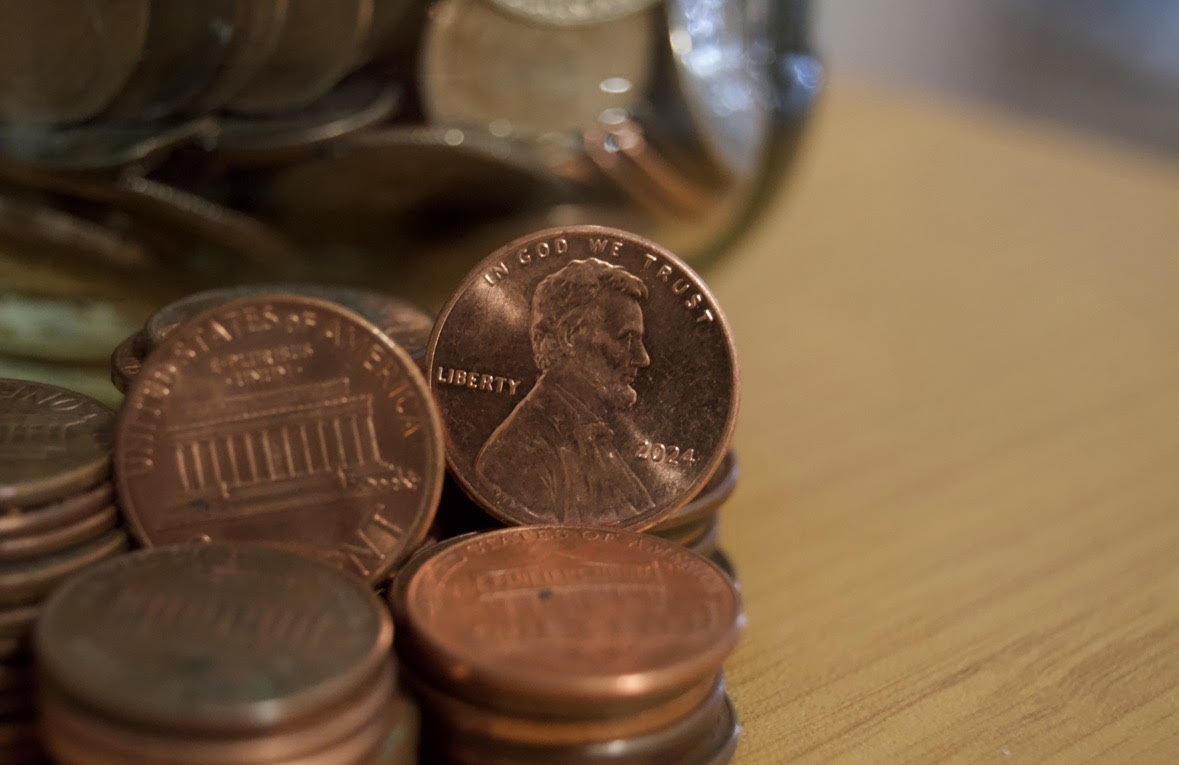
What happened to “every penny counts”? After being manufactured for over 230 years, production of the penny was stopped. Some people believe that taking away the penny was a way for companies and the government to make a little pocket change. Abe Lincoln would not find that honest at all.
“Honest Abe”
Abe worked in a store in a small town where people did not have money to spare. Abe hated the thought of cheating anyone. One day, a woman came in and bought a product for over two dollars. She paid Abe and they both went about their day. He found out she overpaid and he walked more than two miles to return the extra cents.
Timeline from the United States Mint
1792– The first design of the penny was a woman with flowing hair that symbolized liberty and was made of pure copper. She remained on the penny for over 60 years.
1857– The penny got smaller and it began to be made out of copper and nickel. The penny’s design changed, again, featuring a flying eagle.
1859– The “Indian Head” design was introduced.
1909– Abraham Lincoln became the first president on a coin to honor his 100th birthday. At this point, the penny was being made out of copper and zinc. Lincoln was put on the penny because he was the “common people’s president”: came from extreme poverty and built up to be president.
1943– Pennies were made out of zinc-coated steel because of the increased need of copper in World War II.
1982– Composition of the penny changes from 95% copper to 97% zinc with copper plating.
November 12, 2025– The penny production was put to a halt, which will allow it to gradually come out of circulation.
The production stop raises the question of “how will this affect prices?” Transactions ending in one, two, six, or seven, then the amount is rounded down. If it ends in three, four, eight, or nine, the amount is rounded up. The U.S. The Department of the Treasury has said that the states will “ultimately amend their sales tax laws is the right and responsibility of those jurisdictions.”
While people think the government was trying to attempt a penny scandal, the reason it was terminated was because it went from costing roughly two cents to four cents per penny to mint. The Secretary of Treasury can mint and issue pennies as necessary under Federal Law. The Federal Reserve will recirculate the 114 billion pennies that currently exist, but circulation will heavily depend on consumer behavior.
The penny may be the smallest coin in size and in monetary value, but its significance is not. It’s a representation of honesty and fairness, accessible to the common people. Lincoln rose from being a common person and built his life on those exact morals. Each purchase that’s made loses a couple of pennies and will add up over time. Every penny counts.